
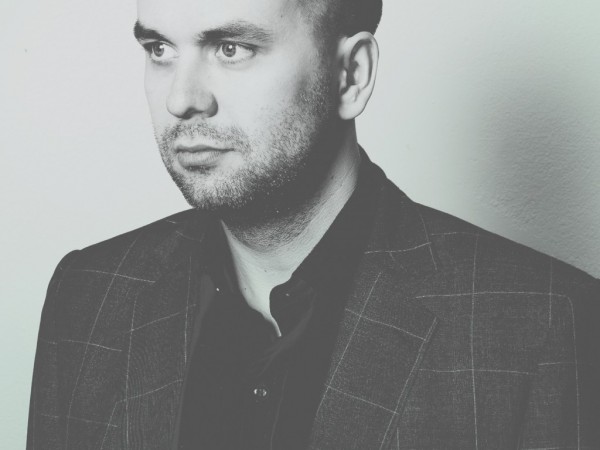
Next writer in the Jazzpresso series is pianist Jussi Fredriksson. Turku-born Fredriksson represents Finnish jazz profession at its best - or worst - as he produces events, runs a record label and participates in the culture-political discourse. Fredriksson is not concerned about the demise of tradition in jazz music, but instead is contemplating over how to protect the artistic liberty and independence.
It is with a humble mind that I accept the challenge to share my views about jazz music after two giants of Finnish jazz, Professor Jukkis Uotila and saxophonist Jukka Perko. In fact, it has been my wish since the foundation of Jazz Finland that the website would offer a channel for journalistic content, too. Unfortunately, writing about jazz music has been relatively marginal in Finland so far, and in this respect the new Jazzpresso series has been a welcome addition. Usually, it takes time and effort to make the best things happen. I can only imagine what a cornucopia of great thoughts on jazz we will have here two years from now, after the 20th Jazzpresso contributor will have finished his or her text.
Many thanks to Jukka who appointed me the next writer in this series and to Jukkis for opening the debate. The two articles illuminated the two great artists’ philosophies of jazz well and sparked some lively debate as well. Uotila’s text apparently hit a sensitive spot with many, and the emotional turn that the discussion took unfortunately eclipsed some of the most relevant points that he made. What the multitude of responses showed, however, was that people are interested in jazz and its future, and that the passion that fuels us, makers of jazz, is alive and kicking. Cherishing the tradition and understanding how much substance it can render is, I agree, vital in today’s art world, which is growing ever more fragmented. I think that Perko managed to capture the current state of affairs excellently in his text: the world of music is undergoing a rapid revolution at the moment so that making decisions lightly might not be the right way to go. Besides, uncertainty and the state of flux are, after all, alright. Here, accepting the facts and witnessing the positive attitude of older colleagues seems to drive us younger artists on.
Perko tackled many threads of thought that were introduced by Uotila in the first Jazzpresso article. When it comes to the aesthetic-philosophical questions of jazz music, I agree with Perko: trying to determine what is wrong and what is right seems impossible and thus, to my mind, futile. What also appealed to me was his description concerning the passing on the great story of jazz to the next generation. Today’s rising generation cannot be commanded; they can only be guided. This phenomenon has its pluses and minuses, for sure, but we will have to live with it. I do not think that the young generation’s way of doing things derives from a lack of respect for authorities; rather, it seems simply to mirror the ongoing shift in the culture of communication, which highlights the individual and her choices more.
Both Uotila and Perko have made a longer career as jazz artists than I have, which, naturally, makes my perspective somewhat narrower compared to theirs. However, I have, in addition to my career as a musician, worked in the jazz industry extensively and, in the process, I have acquired a good general picture of the politics and realities of being a musician and producer of jazz music in today’s Finland. This article series was launched by Jukkis Uotila with a text about the tradition and its place in today’s jazz world, while Jukka Perko responded with an anatomy of a jazz musician’s life and learning. Taking up the challenge, I will discuss the near future of jazz as I see it when peering at the horizon from my perspective – not forgetting its history either.
Of Tradition
The Sibelius Academy takes ample care of the preservation and passing on of the jazz tradition in Finland. As far as I know, the appreciation of Afro-American heritage is not only restricted inside the Academy’s walls, but in general it seems that young jazzers hold the tradition in high regard. Consequently, the extinction of traditional forms of jazz seems to me not a real concern at all – not even in the face of the plethora of musical genres available today. In fact, I have sometimes heard Finnish jazz groups being criticised for holding on to the American jazz sound too steadfastly. To me, such accusations seem absurd: after all, we are talking about a musical genre that originated in North America. In fact, I am convinced that the rising generation of jazz professionals – not only musicians but producers and other players – will be more civilised and open-minded in this respect and we will finally get rid of polarisations of this kind. Internationalisation will probably play a big role here, too. In general, highlighting a national heritage or a national essence restricts artistic activity rather than enhances it, so I do not think it ought to be encouraged. As to music promotion, highlighting the exotic Finnish or Scandinavian origin might be of use, but it should be remembered that promotion and creating art are two different things. I will talk about this in more detail below.
Of fragmentation and excavation
In his text, Jukka Perko compared his own method of studying jazz to excavation. As a student, he bored deep into the bedrock of bebop and has been able to make the genre resonate wonderfully in today’s world. When it comes to studying an instrument and its history, this is the best method of acquiring skills for artistically relevant expression, I think. No doubt, eclecticism will increase in the future, but excavation will surely stay steadily in vogue, too. Who knows, it might even become a retro trend in the same way as collecting vinyls. No force without friction – it seems to be a law of the universe.
Luckily for me, I first discovered jazz before the digitalisation of music. I managed to form a strong emotional tie to recordings that were close to my heart and that tie has not broken since, on the contrary. Unfortunately, I cannot say the same about albums and artists that I have come across within the past ten years. Some years ago, I realised that streaming services had done serious damage to my habit of listening to music. I could not form that personal tie to new music; the abundance and availability of material – and the fact that it was practically free – confounded me. I reacted by buying a record player and fitting my shelf with only a handful of vinyls. It worked, and a few new albums soon became quite special to me. I firmly believe that a deep relationship to recordings forms the basis of a jazz musician’s training, which is why it should be cherished one way or another. Whether we wanted it or not, globalisation and overflow of information brought about by the Internet are undeniable facts. There will be as many opinions as there are people eager to voice them. Obviously not all of them are relevant, which gives literacy a whole new meaning. Being able to interpret the vast mass of material available today, one has to master both traditional literacy and media literacy, and learning takes effort and patience. For instance, interesting discussion sometimes takes place on Facebook but often the state of communication on social media is deplorable. The capability of discerning and summing up what is essential – both in music and human interaction – is one of the most important skills in our time.
Of populism and artistic integrity
To me it is obvious that art should resonate in the surrounding society on some level. However, it is equally important to avoid reducing the value of art to its instrumental aspects: in other words, the absolute value of art ought to be retained. It is everyday life also to a jazz musician to try and keep these two aspects, which are not mutually exclusive, in balance. I believe that the solution is simple: the artist should have perfect autonomy over his or her art, while it is the supporting network’s task to ensure that the work of art resonates with the audience as well as possible.
Having booked, by now, almost 200 jazz groups to perform in the Flame Jazz concert series, I am convinced that in Finland the guiding light in artistic creation is not populism or an effort to court the audience. All artists that I know have boldly decided to create art guided by their hearts and artistic ambitions only. Some are better at promoting their music than others, but I have, to my joy, noticed that nowadays artists know better to delegate the promotional duties to professionals. This is pure common sense; it has nothing to do with populism. Understanding that promotion is a vital part of the deal, shows, I think, true devotion to one’s career as an artist. This is an industry where a regular salary is anything but self-evident, so that a prerequisite of getting by as an artist means being successful on all levels of artistic production. This is why most of us, myself included, have had to take up a regular job at the side.
To most of us jazz artists, artistic autonomy is a utopia. Even if we made music in keeping with our artistic vision, too big a part of our day has to be spent on other duties. 24 hours is simply not enough, and the intensity of artistic work is bound to suffer. In the current situation, it is the responsibility of jazz artists themselves to strive to change the structures for there is no one else who would do it for us. The Finnish Jazz Federation has proven willing to further the professionalization of the Finnish jazz field. Indeed, it is the most logical option for a body to initiate the long-awaited structural changes in the field. Our cultural politics does not bear comparison with the international average, so it is hardly surprising that making a career as a professional jazz artist is as good as a mission impossible. There are only a handful of artists who have a chance to work as full time professionals. The problem can be compared to world-class sports: it only those who can rehearse undisturbed and full time and who are supported by a team of other professionals that can achieve the world-class standard. One would think that a civilised state benefitted from granting the same rights to its most distinguished artists. Sports and arts are the most cost-effective building-blocks that Finland has to promote its country brand. I sincerely hope that the new Parliament, now that it is about to start its term, would realise that investing into bold and visionary cultural ventures will pay back amply.
Of communication
Perko’s searching thoughts, his idea of the fluid nature of jazz and call for pulling on the same end of the rope resonated with me strongly. At times it felt a bit monotonous to see eye to eye with him on almost every point. Irrespective of the quality of my emotional reactions, many of Jukka’s excellent insights gave rise to thoughts to be developed further. To disagree for the sake of disagreeing is never fruitful, I think, so I will not take that path here either. Generally speaking, differing opinions are a perfectly normal part of communication, but experience has taught me that we Finns are not good at disagreeing. An ability to overcome disagreements should be a basic skill and the foundation of higher levels of co-work, but it is sad how often we run out of means and willpower in the face of a conflict. An inevitable question that arises is do we even want to be successful? I recently read a book based on the correspondence between Li Andersson and Susanna Koski, the presidents of the Left Youth and the Kokoomus Youth, respectively, and it struck me that despite disagreeing on almost every point, they could express their opinions with grace and respect.
The goals of the Finnish jazz community ought to be set much higher, and to achieve them we should develop new cultures of communication and activity. Jazz Finland, a concept launched by the Finnish Jazz Federation, has successfully created new jazz communities. Positive energy is on the move, and I believe that the Finnish jazz culture will take big leaps in near future – not only in its home country but in the international scene, too. These results will remain beyond our reach, however, unless we learn to cope with the inescapability of differing opinions that we have within our own community. In our ever more fragmented art world, the role of cooperative skills is becoming increasingly important.
Of cooperation
When at the beginning of my career, I realised that despite the close-knit jazz community around them, my colleagues strove to further their careers on their own almost without exception. Without good networks to support them, this effort often seemed to me rather ineffective. Having become aware that structural deficiencies of our field hindered me from realising my artistic vision in the way that I would have wanted, I decided to make something happen also through other means than creating art. Being involved in the development of a number of jazz organisations has convinced me of the need of strong umbrella organisations to ensure the rights and opportunities of individual artists in today’s world. In the Internet age it is more and more challenging to make one’s voice audible, which is why we need bigger and louder flag bearers to speak for individuals.
To my great joy, communal spirit is growing stronger in the field of Finnish jazz. On grass-root level, artist collectives are being founded; small record companies and jazz agencies are cropping up, not to mention new distribution networks, collaborative promotion ventures, club concepts and concert series. The Finnish Jazz Federation has cemented its role as the umbrella organisation of Finnish jazz, and the concept Jazz Finland has encouraged players of the field to unite both on a symbolical and practical level to set new common goals and seek for new modes of activity. New structures are being built all the time, that is. What we are waiting for is the awakening of the public sector. It is a fact that public funding of jazz is marginal compared with that of many other arts. Especially the question of regular concert activity has been ignored almost completely. With regard to this issue, Finland is a veritable periphery: we do not have one jazz venue that would be supported by the government and match international standards. As a result, we are excluded from international jazz club networks, which – it goes without saying – has a very negative impact on the export and internationalisation of Finnish jazz. In addition to taking care of export, the importance of import should not be forgotten: by bringing international artists to Finland we create invaluable contacts and enrich our own cultural offerings. With the help of these contacts, we will also be able to carry out artist exchange, which increases our mobility and reputation in the international scene.
Of internationalisation
Throughout its history, Finnish jazz has been relatively unknown outside Finland. Of course there have been successful individual artists such as the previous Jazzpresso writers Uotila and Perko and such other names as Iiro Rantala, Timo Lassy and Verneri Pohjola, for example. Individual success stories and the victories of up-and-coming Finnish jazz artists in international jazz competitions have created an illusion of Finnish jazz being widely internationally recognised. From the angle of a professional artist, however, international success means, above all, regular concert activity and the unpleasant fact is that Finnish artists still tour abroad very little. So far efforts to further the internalisation of Finnish jazz have been random, sporadic and ineffective. Moreover, when it comes to internationalisation, as important as individual initiative is too much responsibility falls upon the artist him- or herself.
Lately, however, we have taken steps towards more positive and productive modes of communication and cooperation. A case in point is last year’s Jazz Finland Festival, which managed to rally Finnish jazz artists and other players like never before. Also, as a brand, Jazz Finland proved to stand for action instead of lofty but empty speeches and, indeed, new fine ventures are being worked on within the framework of Jazz Finland already. In addition, new organisations furthering the cause of Finnish jazz have emerged lately and the Finnish Jazz Federation in cooperation with Music Finland strives to support their activity. It is a fact, however, that going international is impossible without proper resources. This is why I hope that the public sector will open its eyes to the positive development that is taking place in the sphere of Finnish jazz and give it a welcome boost. The table is laid; we are only waiting for the MPs to seat themselves.
Finnish jazz bears comparison with international jazz and it deserves attention around the globe. To make this possible, both artistic merit of the music and the production machine behind it need to be world-class. On the same note, I would like to challenge the next writer to discuss how they perceive the chances and challenges of internalisation.
Text: Jussi Fredriksson
Translation: Annamari Innanen
Photo: Tero Ahonen